Guide · October 18, 2026 · 9 min read
Why Are Medicines So Expensive?
Medicine · Access · Justice
Only Maps Have Borders: The Truth About Life-Saving Medicine Prices in the US, UK, Australia and UAE
A young man died rationing insulin in the richest country on Earth. This is why it keeps happening, and why it doesn’t have to.
Key takeaways
- Medicines cost so much in rich countries because of patent monopolies, market-based pricing and middlemen, not because of production cost.
- People ration insulin, HIV drugs and cancer treatment because of price. A Minnesota man, Alec Smith, died in 2017 after losing coverage.
- Approved generics contain the same active ingredient as the brand and must prove bioequivalence.
- Indian generics are cheaper because of competition and patent law. In 2001 a triple HIV regimen was offered at $350 per patient per year.
- thechemistclub is a members-only specialty pharmacy. Prescription-only medicines need a valid prescription, and members must follow local import rules.
A medicine does not know which passport its patient carries.
Alec Smith turned 26 on May 20, 2017. Under U.S. insurance rules, that birthday meant he was about to lose coverage through his mother’s plan. He managed a restaurant in Minnesota, he lived on his own, and he had Type 1 diabetes, which means his body makes no insulin. Without it, a person is in serious danger within days.
After he came off his mother’s plan on June 1, his insulin and supplies would have cost around $1,300 out of pocket, according to his mother. His family believes he began to ration. He was found dead in his apartment on June 27, 27 days after losing coverage. The cause was diabetic ketoacidosis. He was three days from payday.
“My son died because he could not afford his insulin.”Nicole Smith-Holt, Alec’s mother, to CBS News
Nicole has spent the years since telling his story to lawmakers and to a documentary crew. Insulin was discovered a century ago. Nothing about the science failed Alec. The price did.
This is not a poor-country problem
When people hear “can’t afford medicine,” they picture far-away places. But the United States, the United Kingdom, Australia and the UAE are among the wealthiest countries ever to exist, and all four have patients quietly doing the maths between a prescription and a month’s rent.
Researchers call it cost-related non-adherence: skipping doses, splitting pills, delaying refills or not filling a prescription at all. Surveys by the Kaiser Family Foundation have found it is common among American adults. The consequences depend on the illness:
- Diabetes: rationing insulin leads to emergencies like Alec’s, and over years to blindness, amputations and kidney failure.
- HIV: missed doses allow the virus to rebound and develop resistance.
- Cancer: an interrupted course can mean the disease returns, sometimes harder to treat.
- Heart disease, epilepsy, asthma, transplants: skipped pills become hospital beds.
Nobody chooses to die. People choose between food, rent and medicine, and sometimes the sum comes out wrong.
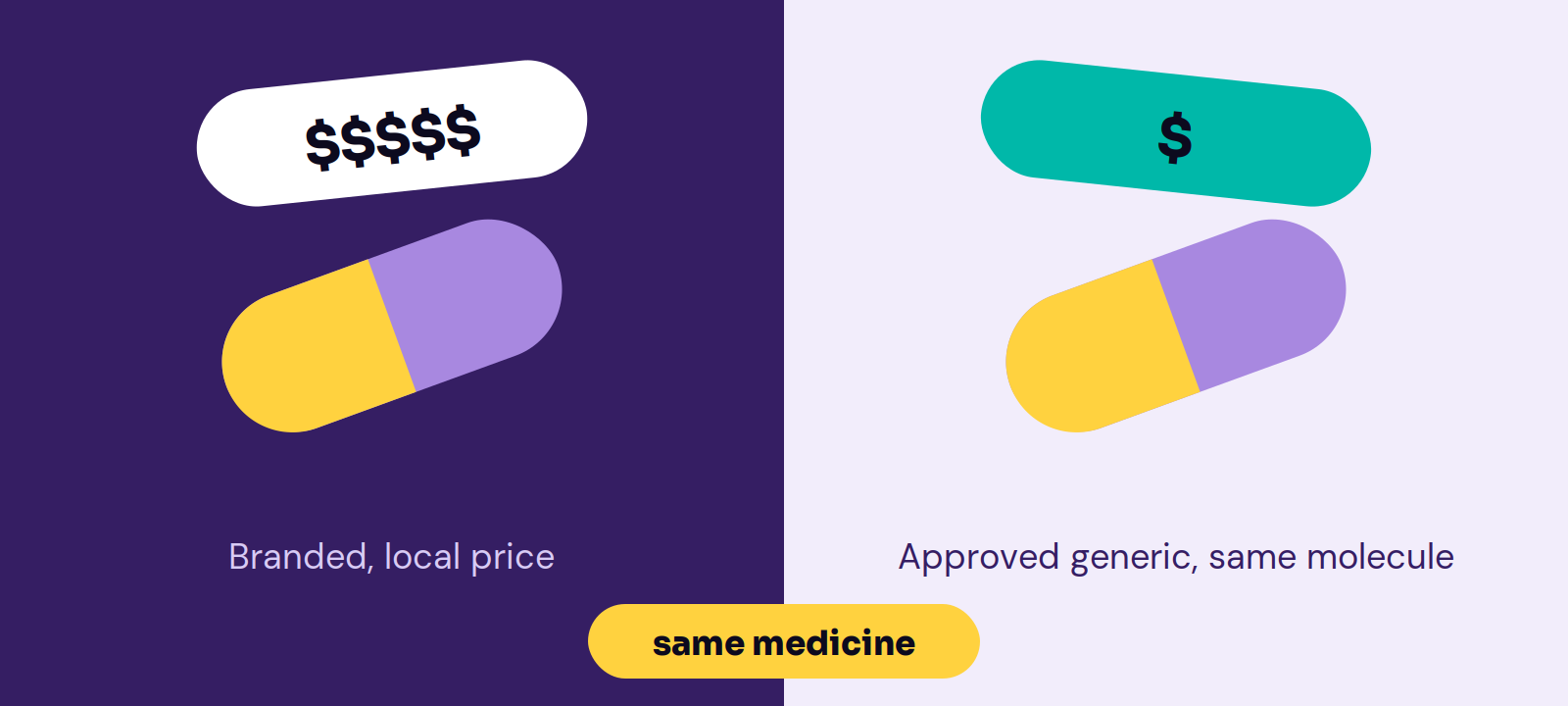
Why does medicine cost so much?
1. A monopoly by design
A new drug is protected by patents. For years, one company is the only seller and sets the price with no competition. Firms often extend that protection with small changes to existing drugs, a practice critics call “evergreening.”
2. Price follows what people will pay, not what the pill costs
Drug development is genuinely risky and expensive, and most candidates fail. But much early research is funded by taxpayers, and companies also spend heavily on marketing and shareholder returns. A price is a decision, not a law of nature. Insulin’s list price roughly tripled between 2002 and 2013, though the drug itself had not changed.
3. The middlemen
In the U.S., rebates, insurers and pharmacy benefit managers sit between maker and patient. List prices can be inflated so that rebates look generous, and the person at the pharmacy counter may pay the inflated number.
4. Even “universal” systems have gaps
The UK’s NHS and Australia’s PBS negotiate hard, yet some newer cancer and rare-disease drugs are not funded, and patients face co-payments, waiting lists and appeals. In the UAE, insurance exclusions and branded mark-ups can leave residents, especially expatriates, carrying large costs.
The pattern
The cure for hepatitis C, the HIV regimen, the cancer pill: each was a triumph of science that then became a product too expensive for the very people it was invented for.
The story that changed the world’s mind about “cheap” medicine
In the late 1990s, AIDS drugs existed, but a year of treatment cost around $10,000 or more. For most of Africa and Asia, that was a death sentence in a price tag. Then an Indian chemist stepped in.
Yusuf Hamied, a Cambridge-trained chemist who ran the Indian generics company Cipla, offered Médecins Sans Frontières a triple-drug HIV combination in 2001 for $350 per patient per year, compared with roughly $10,000 from Western companies, according to SciDev.Net’s coverage of the documentary Fire in the Blood. Western drug companies and governments were furious. Many people assumed Indian drugs must be substandard. They were wrong. Those generics became the backbone of HIV treatment across the developing world and are credited with saving millions of lives.
Why is Indian medicine so much cheaper?
Competition at scale. India built an industry around making medicines whose patents have expired. Dozens of manufacturers compete on every molecule, and that pushes prices down, often by 80–95% compared with the original brand.
Smart patent law. Section 3(d) of India’s Patents Act blocks patents on minor modifications of known drugs, which helps cheaper versions reach patients sooner.
No billion-dollar marketing machine. A generic doesn’t repeat the original trials or fund a global advertising campaign. It proves it works the same, and sells on price.
Is it really the same medicine?
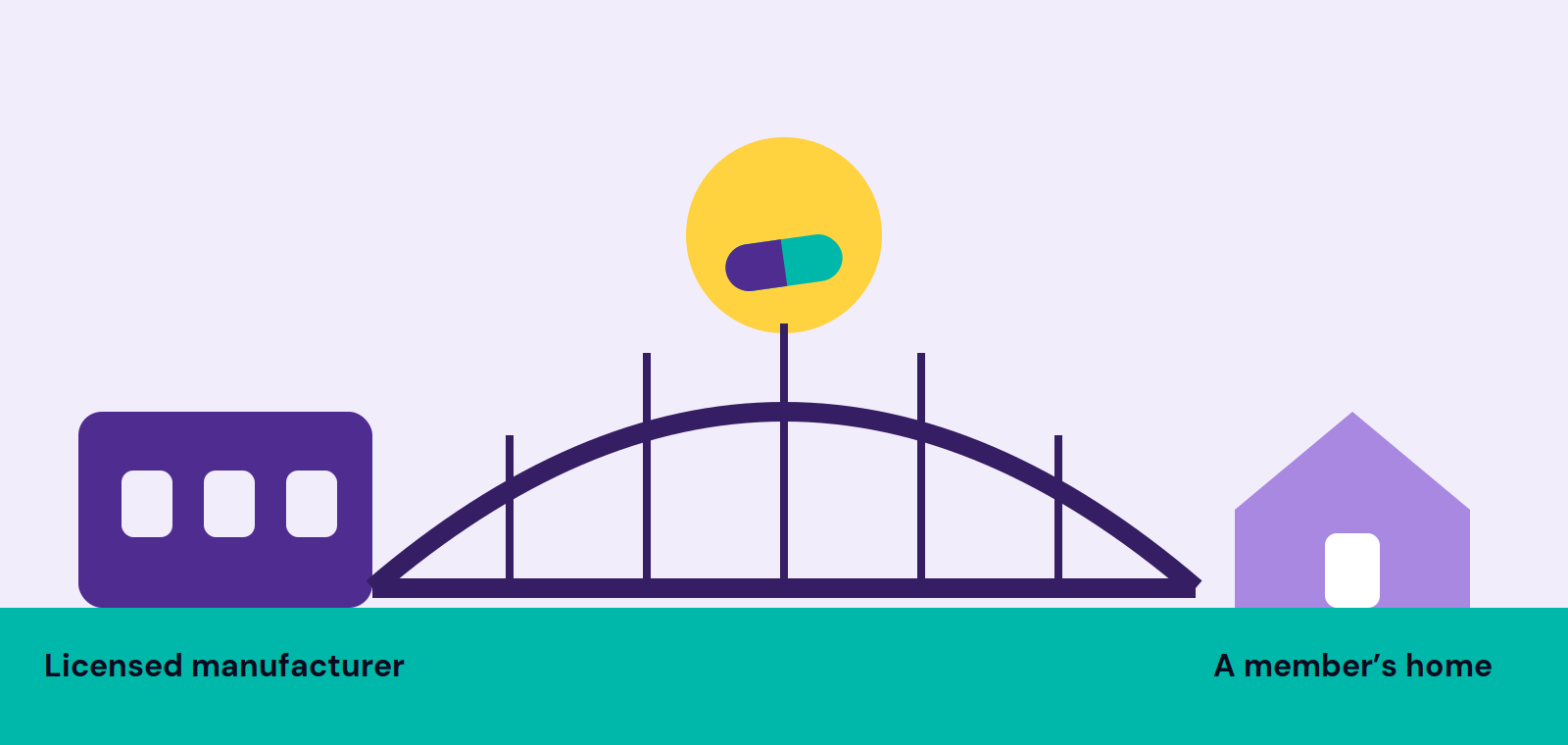
An approved generic must have the same active ingredient, strength, dosage form and route of administration as the original, and must prove bioequivalence: it delivers the same amount of drug into the bloodstream at the same rate. The U.S. FDA, UK MHRA and Australia’s TGA apply this standard to their own generics, which already make up roughly nine in ten prescriptions filled in the U.S.
Honesty matters here. Quality depends on the manufacturer, in India as anywhere. India has many WHO-prequalified, FDA-inspected and EU-GMP-certified plants, and it has also had enforcement problems with some producers. The right question is never “where was it made?” It is “who made it, and is it verified?”
| Myth | Reality |
|---|---|
| “Cheap means weaker.” | Approved generics must match the original’s active ingredient and prove bioequivalence. |
| “Indian medicines are inferior.” | Verified Indian manufacturers supply regulated markets worldwide. Verification is what counts. |
| “High price means high quality.” | Price reflects patents, marketing and market power, not purity. |
Meet thechemistclub
Your chemist, everywhere. thechemistclub is a members-only specialty pharmacy built on a simple belief: a patient’s postcode should not decide whether they can afford to live.
We connect members to genuine medicines for cancer, diabetes, HIV and other long-term conditions, sourced from licensed manufacturers and authorised distributors, with quality checks at every step. Same active ingredients. No border markup. Good health is a club, and everyone’s in.
Figures as stated by thechemistclub.
How it works
- Members, not customers. Every order belongs to a registered member with a real need.
- Upload your prescription. Prescription-only medicines need a valid one, because these drugs belong under a doctor’s care.
- Cold-chain delivery for medicines that need temperature control, with discreet worldwide shipping and 30-day returns.
- A pharmacist for you, seven days a week. Ask anything, in plain words.
- Know your local rules. Import rules differ across the USA, UK, Australia and UAE, and some controlled medicines cannot be imported at all. Members are responsible for following the law that applies to them, and our pharmacists can explain the basics.
What you can do right now
- Ask your doctor or pharmacist about generics of your current medicine.
- Look up local help: manufacturer assistance programmes, state insulin caps, the PBS, or hospital pharmacy schemes.
- Never ration in silence. If you can’t afford a dose, tell your doctor. There are often options.
- Compare prices for the same molecule before you pay.
Watch, read and listen
- KFF Health News / NPR: “Insulin’s Steep Price Leads To Deadly Rationing”, with video.
- CBS News: “Woman says her son couldn’t afford his insulin – now he’s dead”
- Variety interview with the directors of MTV’s documentary Pay or Die
- Diabetes Connections podcast: a full interview with Nicole Smith-Holt
- Scroll.in: how Yusuf Hamied’s Cipla developed affordable generic AIDS medicine
- SciDev.Net on Fire in the Blood
The bigger point
The molecule that keeps an HIV patient alive costs pennies to make. The difference between that and a four-figure price is patents, policy and profit, not chemistry. Alec Smith should be 35 years old and running a restaurant somewhere. Instead his mother is still testifying.
Medicine is not a luxury product. It is the difference between a long life and a short one, and a pill does not care what passport its patient holds.
Frequently asked questions
Why are medicines so expensive in the US, UK, Australia and UAE?
Patent monopolies, pricing set by what the market will bear rather than production cost, insurance and pharmacy middlemen, and funding gaps even in universal systems all push prices up.
Are Indian generic medicines as effective as branded medicines?
An approved generic must contain the same active ingredient, strength and dosage form as the original and prove bioequivalence. Quality depends on the manufacturer, so verification matters more than country of origin.
Why are Indian medicines cheaper?
Many manufacturers compete on every off-patent molecule, India’s patent law limits patents on minor modifications of known drugs, and generics do not carry the cost of repeating original trials or global brand marketing.
Is it legal to buy medicines from another country?
It depends on the country and the medicine. Import rules differ across the USA, UK, Australia and UAE, some controlled medicines cannot be imported at all, and prescription-only medicines require a valid prescription. Check the rules that apply to you.
What is thechemistclub?
thechemistclub is a members-only specialty pharmacy that connects members to genuine medicines sourced from licensed manufacturers and authorised distributors, with prescription upload, cold-chain delivery and pharmacist support.
This article is for general information and is not medical advice. Never start, stop or change a treatment without speaking to your doctor or pharmacist. Importation rules vary by country; check yours before ordering.
This article is for general information and is not a substitute for advice from your treating doctor.