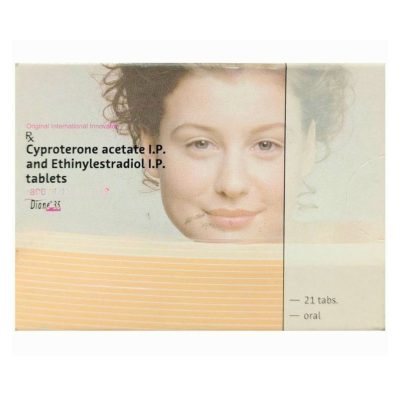
Diane-35 in 2027: The Pill France Suspended and Europe Kept

On 30 January 2013, France’s medicines agency announced it would suspend a pill that about 315,000 French women were taking every day. Over 25 years, four women had died and 125 more had suffered blood clots linked to it. The pill was licensed to treat acne, but more than half of its prescriptions were being written for contraception, which it was never approved for. Within months, Europe’s regulators looked at the same evidence and reached a different conclusion: keep it, with limits. In 2013 it was sold in 116 countries, and more than a decade later it is still widely taken by women for acne, unwanted hair and PCOS. It is also still argued over. So was it cleared, or merely forgiven?
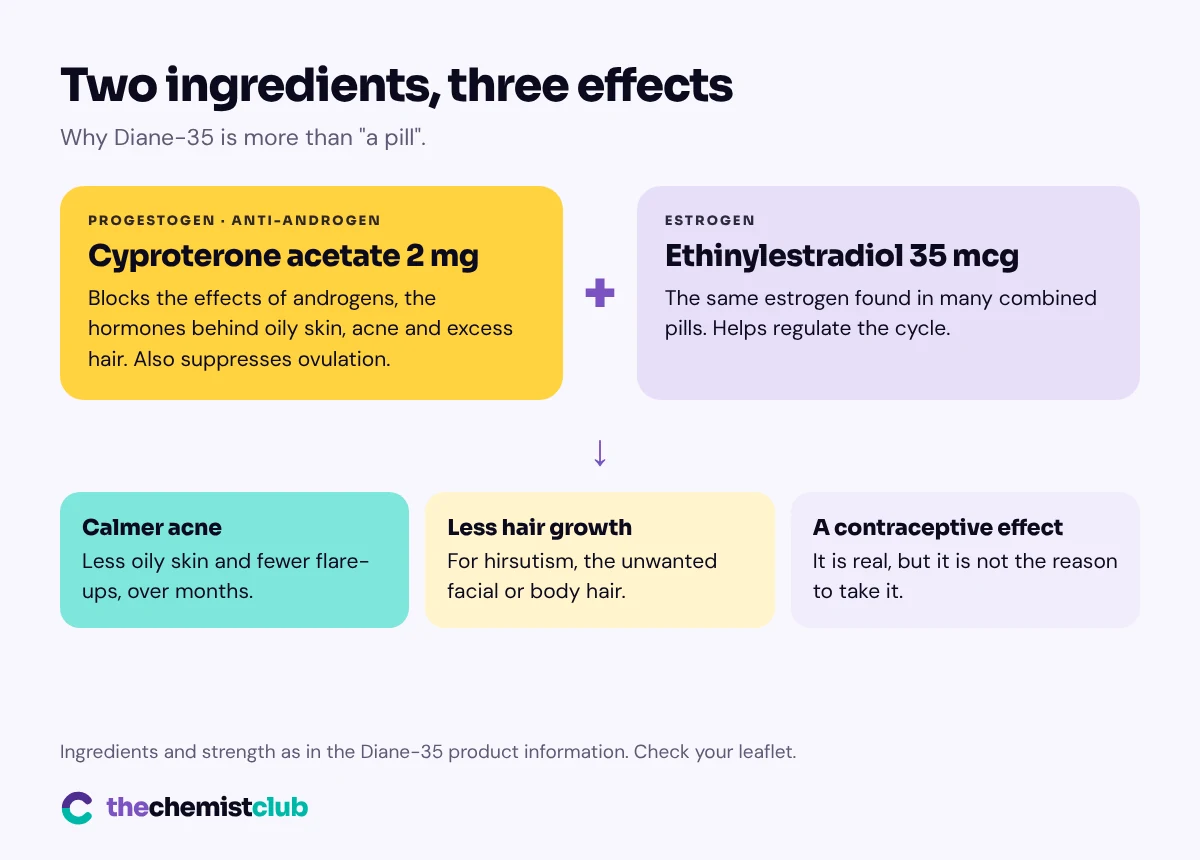
The 30-second version, for the sceptic: Diane-35 is a combined pill containing cyproterone acetate 2 mg, an anti-androgen, and ethinylestradiol 35 micrograms, an estrogen. It is taken for 21 days, then paused for 7. In the EU and UK it is licensed for moderate to severe acne linked to androgen sensitivity and for hirsutism (excess hair growth) in women of reproductive age, and for acne only after topical treatment or antibiotics have failed. It also works as a contraceptive, but it is not licensed just for that. The main risk is venous blood clots, about 1.5 to 2 times that of levonorgestrel pills. It must never be combined with another hormonal contraceptive, and it is not for women with a history of meningioma, or for men.
Here is how this works. Instead of a lecture, we have collected eight rumours you have probably heard, from friends, forums and the comments under a skincare video. For each, we give you a verdict: true, false, or complicated. Disagree freely. Screenshot the ones that surprise you and send them to the friend who is taking it “for her periods”.
Diane-35 at a glance (2027 edition)
- What it is: a combined hormonal pill with cyproterone acetate 2 mg (an anti-androgen progestogen) and ethinylestradiol 35 micrograms (an estrogen).
- Also sold as: Dianette, Clairette and Teragezza in the UK, Brenda-35 and Juliet-35 in Australia, and Ginette 35 and Krimson 35 in India, among many others.
- Licensed for (EU and UK): moderate to severe acne related to androgen sensitivity, with or without oily skin, and hirsutism, in women of reproductive age. Labels in other countries differ and some mention PCOS symptoms.
- How it is taken: one tablet a day for 21 days, then 7 tablet-free days, starting on the first day of the period. Your leaflet is the final word.
- How long: labels say to withdraw it 3 to 4 cycles after the condition has fully cleared, and not to continue it only for contraception.
- The big rules: acne treatment only after topical treatment or antibiotics have failed, and never with another hormonal contraceptive.
- Key risk: venous blood clots, 1.5 to 2 times that of levonorgestrel pills.
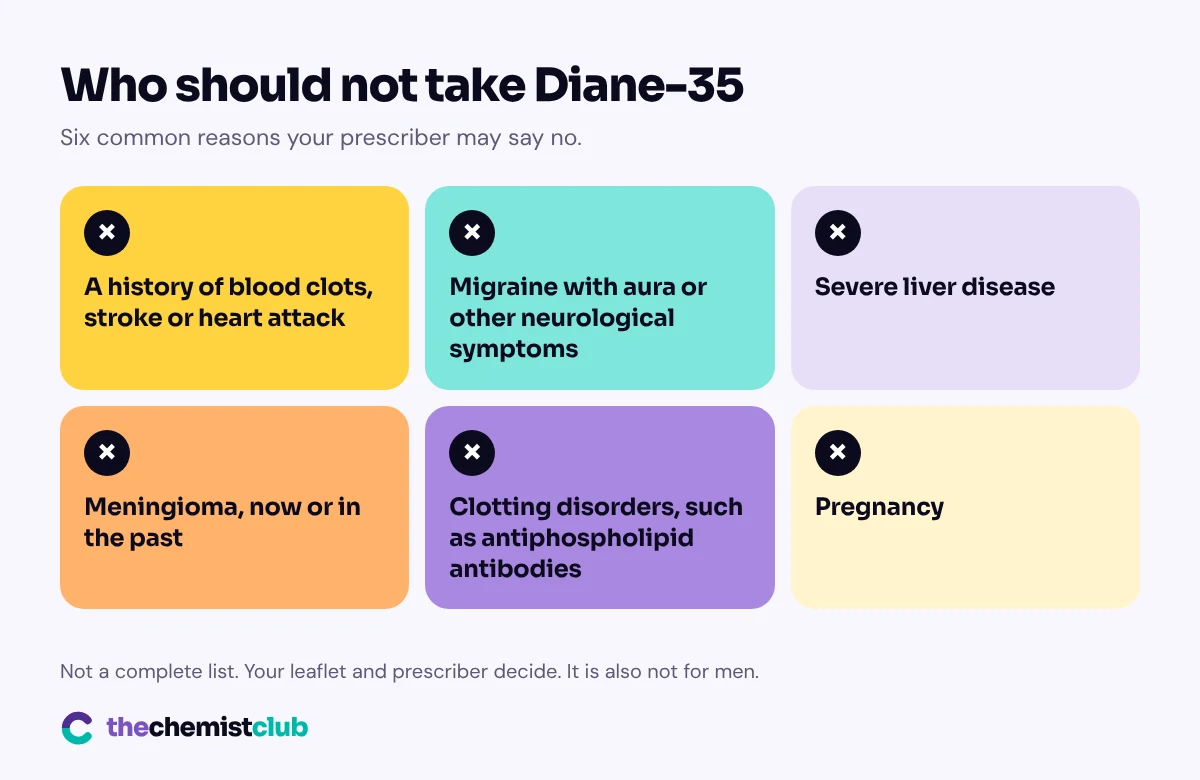
- Not for: men, women with a history of blood clots, migraine with aura, severe liver disease or meningioma, or anyone who is pregnant.
- Edition: 2027. Written November 2026.
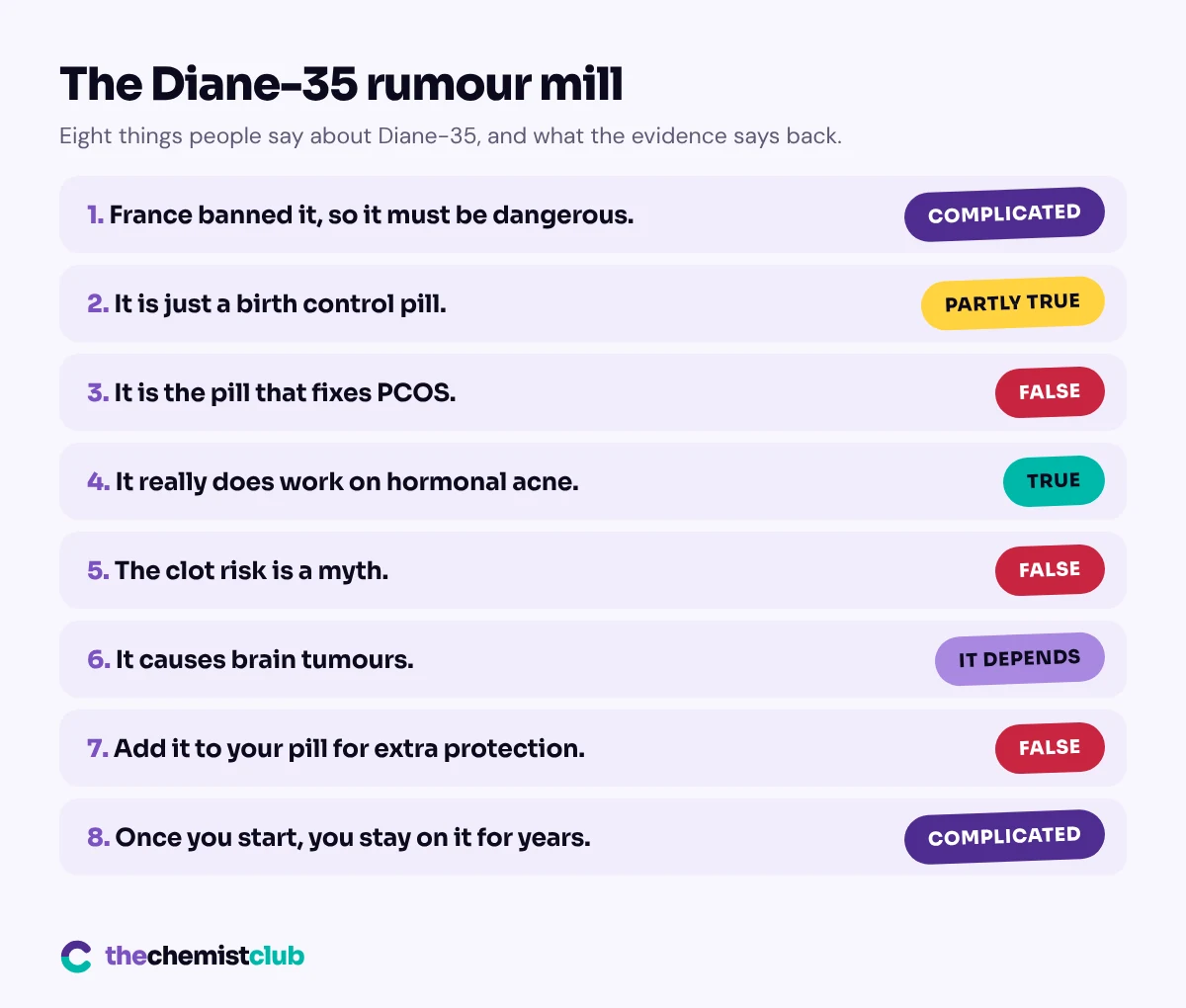
Rumour 1: France banned it, so is it dangerous? Verdict: COMPLICATED
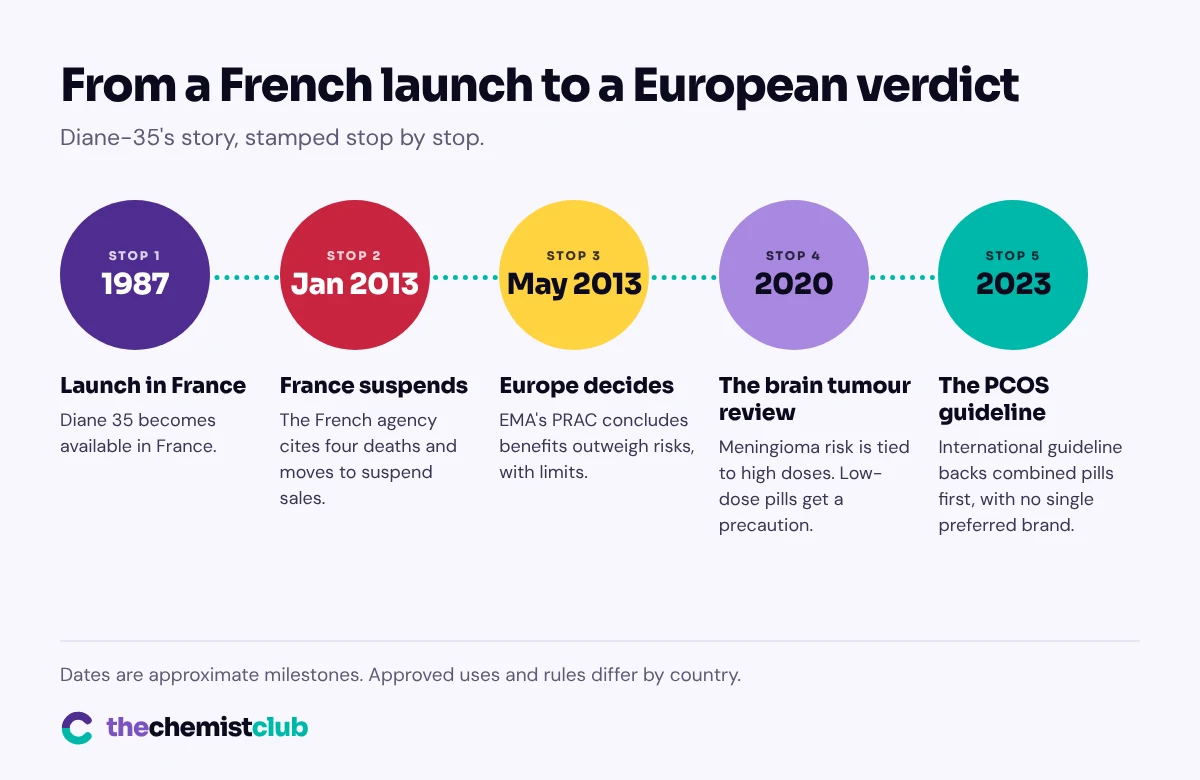
Start with what France actually did. On 30 January 2013 the national agency (ANSM) announced it would suspend the marketing authorisation of Diane 35 Tablet and its generics, phased over three months. It cited four deaths from blood clots over about 25 years and 125 cases of thrombosis. It also argued that the benefit in acne was only moderate and that alternatives existed, and it pointed out that over half of prescriptions were for contraception, which the pill was never licensed for.
Then Europe took a second look. France asked the European Medicines Agency to review it, and in May 2013 the safety committee (PRAC) concluded that the benefits outweigh the risks, provided several measures are taken. Doctors were told to use it only for moderate to severe acne linked to androgens or for hirsutism, to treat acne with it only when topical treatment and antibiotics had failed, to review women already taking it, and never to combine it with another hormonal contraceptive. The UK regulator had said within days of the French announcement that it had no new concerns and that a woman who feels well need not stop. The Australian regulator reached a similar view and asked for careful selection of patients.
So neither side was simply wrong. Europe did not say Diane-35 is safe. It said it is useful for a narrow group of women if used carefully.
Rumour 2: Is it just a birth control pill? Verdict: PARTLY TRUE
It does stop pregnancy. The cyproterone and ethinylestradiol combination suppresses ovulation, and as a result regulators say it provides effective contraception in women who need treatment for androgen-related conditions. If you take it as directed, you are protected.
But “just” is where it goes wrong. It is not authorised as a contraceptive in its own right, and regulators say it should not be taken solely for that. UK and EU labels say it should not be continued only for contraception. When the skin or hair problem has cleared, the advice is to switch to a low-dose contraceptive if you still want one. The French agency was blunt about it in 2013: this is not a pill and should not be prescribed as one.
Why the fuss? Because its clot risk is higher than that of levonorgestrel pills, which means other pills carry less risk for that job.
Rumour 3: Is it the pill that fixes PCOS? Verdict: FALSE
PCOS, polycystic ovary syndrome, is common: about one in eight women of reproductive age. It brings irregular cycles and, in many women, high androgens that cause acne, hirsutism and sometimes hair thinning. Diane-35 is often prescribed for PCOS symptoms, and for those symptoms it can help. But it does not fix PCOS.
The 2023 international PCOS guideline says combined oral contraceptives are the first-line medical treatment for irregular cycles and high androgens, and it does not name a preferred pill. Anti-androgens such as cyproterone are not the preferred starting option on their own: they are considered for hirsutism when a combined pill has not worked after about six months or cannot be used, and only alongside effective contraception. The guideline’s evidence review found no support for using anti-androgens in preference to combined pills. The bleeding you get on the pill is a withdrawal bleed, not a sign that the underlying condition is cured, and symptoms can return when you stop. Weight, sleep, diet and mental health still matter, and the guideline covers all of them.
The honest version: for PCOS, a combined pill manages symptoms. Diane-35 is one of several choices.
Rumour 4: Does it really work on hormonal acne? Verdict: TRUE
Yes, and this is the best-supported claim on this list. The EMA noted that its effectiveness in moderate to severe acne, with or without hirsutism, has been shown in more than 30 clinical trials. The Cochrane review of birth control pills for acne, covering 31 trials and 12,579 women, found that combined pills reduce acne compared with placebo. It also found that pills containing cyproterone acetate did better than levonorgestrel pills, although the data were limited and, overall, few clear differences emerged between pills. How pills compare with antibiotics is still unclear, because only one trial looked at it.
Two caveats. It is slow: the label talks about months, longer in severe cases, not weeks. And in Europe it is a second-line treatment for acne, to be used only after topical treatment or antibiotics have failed. The EMA also noted that the data are limited for hair loss and for acne without androgen features, so it is not a general-purpose skin or hair pill.
Rumour 5: Is the clot risk a myth? Verdict: FALSE
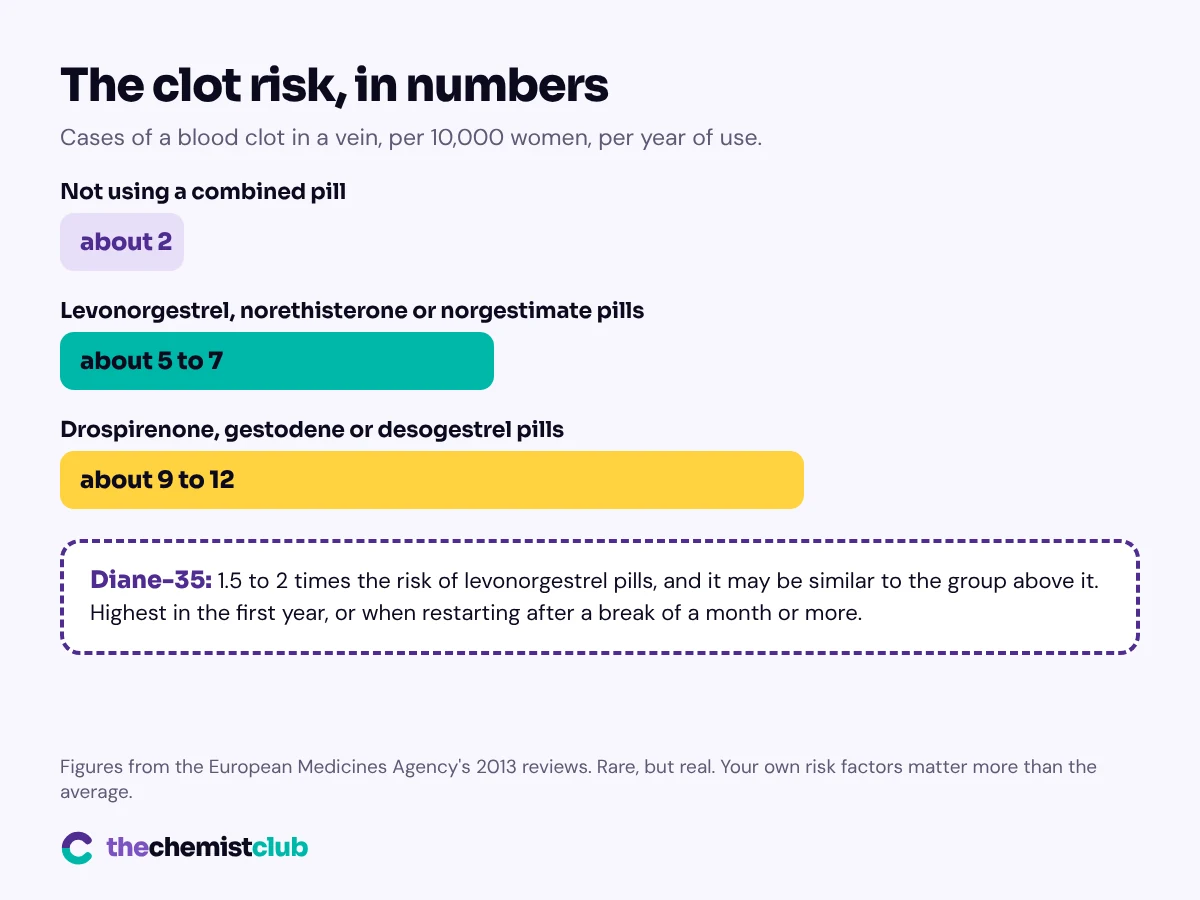
No. It is rare, and it is real. Regulators confirmed that blood clots in the veins (venous thromboembolism, or VTE) are a known risk of Diane-35. Observational studies put the risk at 1.5 to 2 times that of pills with levonorgestrel, and it may be similar to pills containing desogestrel, gestodene or drospirenone. Arterial clots, which cause strokes and heart attacks, have been studied less, and the data suggest a lower risk than for venous clots.
Numbers help. In the EMA’s review of combined pills, about 2 in 10,000 women who are not using one get a clot in a year, about 5 to 7 in 10,000 using levonorgestrel, norethisterone or norgestimate pills, and about 9 to 12 in 10,000 using drospirenone, gestodene or desogestrel pills. Regulators say Diane-35’s risk may be similar to that higher group. The French agency, citing the literature, put the venous clot risk at roughly four times that of women not taking such treatments. Clots can be fatal in roughly 1 to 2 of every 100 cases.
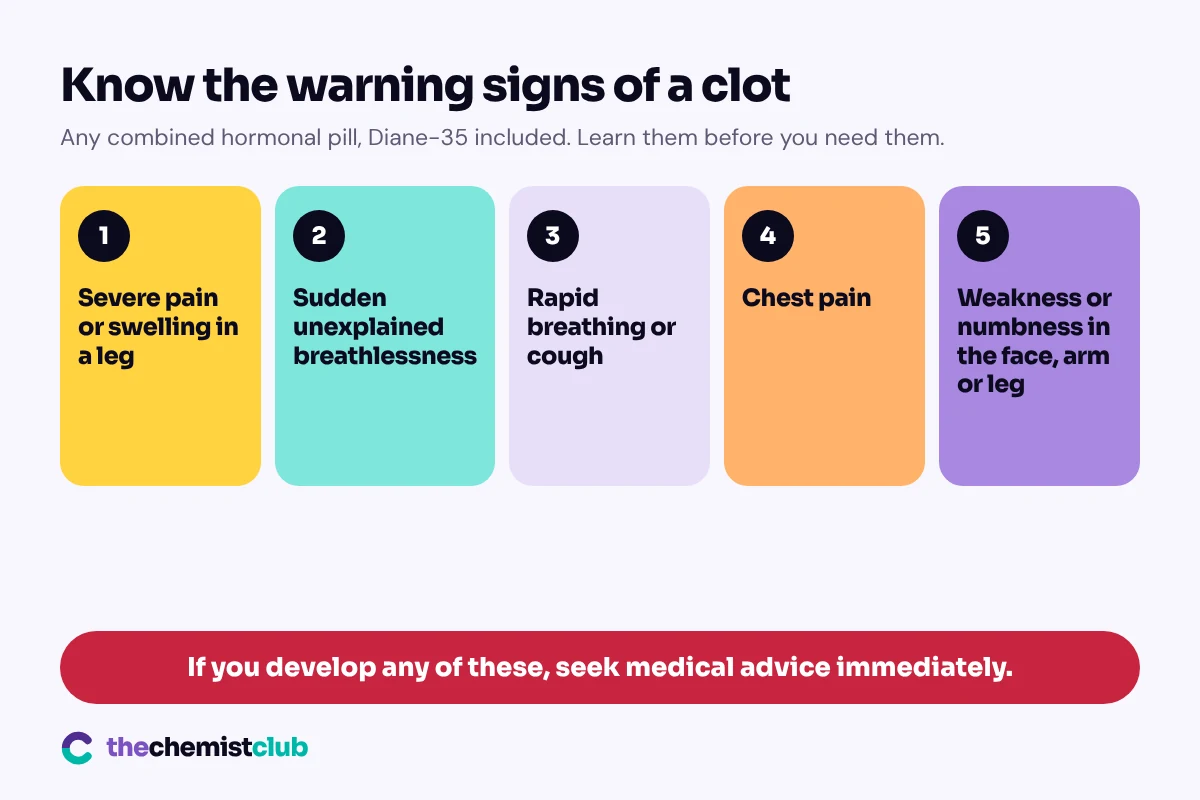
The risk is highest in the first year of use, or when restarting after a break of a month or more. Age, smoking, obesity, long periods of immobility, a family history of clots at a young age and migraine all raise it. Know the warning signs, because early treatment matters.
Rumour 6: Does it cause brain tumours? Verdict: IT DEPENDS
This one is trending, and the answer depends on the dose. In February 2020 the EMA’s safety committee reviewed meningioma, a usually non-cancerous brain tumour, with cyproterone medicines. It found that the risk rises with the cumulative dose and is highest with 25 mg a day or more, taken for years. Overall, the effect is rare: roughly 1 to 10 in 10,000 people, depending on dose and duration. A large French study of women on 50 to 100 mg of cyproterone a day showed the dose-dependent link.
Diane-35 contains 2 mg. For low-dose cyproterone combined with ethinylestradiol, the regulators found no evidence of a risk. The UK’s Yellow Card reports at the time were all linked to high-dose products, in men with hypersexuality, in gender reassignment and in women with hirsutism, after many years of use. None involved the low-dose pill. As a precaution, though, the pill is now contraindicated in anyone who has or has had a meningioma. And if you ever take a higher-dose cyproterone medicine, the story changes.
If you notice symptoms such as changes in vision or hearing, headaches that keep getting worse, memory loss, seizures or weakness in the arms or legs, see a doctor.
Rumour 7: Can you add it to your pill for extra protection? Verdict: FALSE
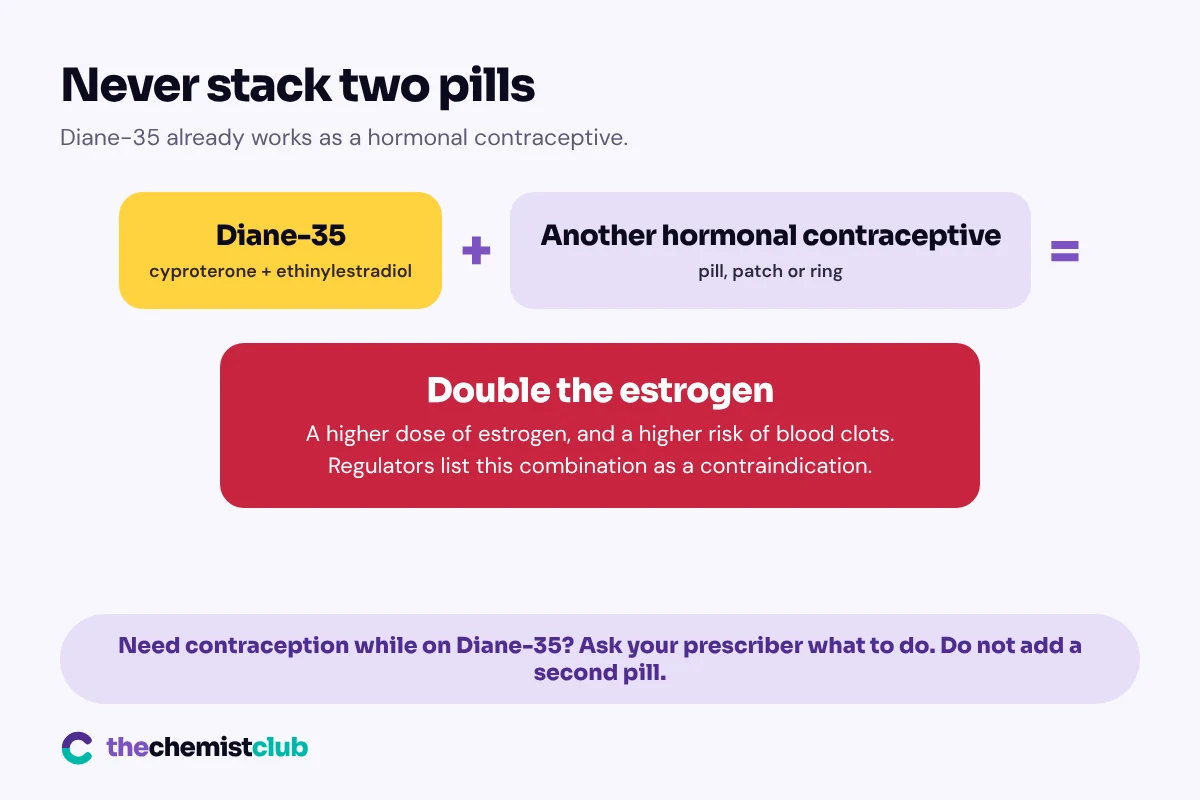
This is the one we most want you to remember. Diane-35 already works as a hormonal contraceptive. If you take it together with another pill, patch or ring, you are taking twice the estrogen, and the clot risk climbs. Both the EMA and the UK regulator found that some women were doing exactly that, and in 2013 it became an explicit contraindication.
If you need contraception while treating acne or hirsutism, you do not need a second pill: Diane-35 covers it when taken correctly. If you are unsure whether it does, or if you miss tablets, ask your prescriber or pharmacist rather than adding something.
Rumour 8: Once you start, do you stay on it for years? Verdict: COMPLICATED
Many women do, but the label says it should be reviewed. The UK and EU wording is clear: withdraw it 3 to 4 cycles after the condition has completely resolved, do not continue it only for contraception, and restart it if the condition returns. The EMA also told doctors to review women who take it, and the highest clot risk is in the first year, or after a break of four weeks or more.
The nuance: for PCOS, the international guideline backs combined pills as first-line treatment, so continuing can be reasonable, and that is a decision between you and your doctor. The point is that it should be a decision, with a reason and a review date, and not something that quietly runs on for ten years because nobody stopped it.
Good to know before you start
This is the one serious section in a mostly entertaining post, and it is short because the rules are simple.
Quick answers: Diane-35 in 2027
You probably still have a few questions, so here are the ones that come up most.
What is Diane-35 used for?
It is licensed in the EU and UK for moderate to severe acne related to androgen sensitivity and for hirsutism in women of reproductive age. Some countries and prescribers also use it for PCOS symptoms. Your leaflet and prescriber decide.
Is Diane-35 a contraceptive?
It has a contraceptive effect because it suppresses ovulation, but it is not authorised as a contraceptive in its own right and should not be used solely for that.
How long does Diane-35 take to work?
Months, not weeks. Labels say benefit is seen over several months, and longer in severe cases.
Does Diane-35 help hair loss?
It helps hirsutism, which is unwanted hair growth. The EMA noted that data are limited for androgenetic hair loss, so do not expect it to be a hair-regrowth pill.
Can I take Diane-35 with another birth control pill?
No. It already works as a hormonal contraceptive, and combining the two doubles the estrogen and raises the clot risk. Regulators list it as a contraindication.
Does Diane-35 cause blood clots?
It can. The risk is rare, about 1.5 to 2 times that of levonorgestrel pills, and highest in the first year. Know the warning signs, and tell your doctor about smoking, family history, migraine and surgery.
How long can I take Diane-35?
The label says to withdraw it 3 to 4 cycles after the condition has fully resolved, not to continue it only for contraception, and to restart if it returns. Ask your prescriber to review it regularly.
Is Diane-35 for men?
No. It is licensed for women of reproductive age. Higher-dose cyproterone medicines used in men are different products with different risks.
The bottom line
Diane-35 is not a villain and not a miracle. It is an anti-androgen pill that works for stubborn hormonal acne and unwanted hair, and it earned a European verdict that is easy to forget: useful, but narrow, and only with care. The clot risk is rare but real. The pill must never be doubled up with another contraceptive. And the label expects a review, not an endless prescription.
The part worth sharing: ask what the pill is for, how long you will take it, and what happens when you stop. If nobody has told you, ask.
Sources and further reading
- Diane-35 / Dianette summary of product characteristics and patient leaflet for your country: indications, contraindications, warnings, duration of use
- European Medicines Agency. Benefits of Diane 35 and its generics outweigh risks in certain patient groups: PRAC recommendation endorsed by CMDh (EMA/318380/2013), May 2013
- European Medicines Agency. Combined hormonal contraceptives: review of the risk of venous thromboembolism (2013)
- MHRA Drug Safety Update. Cyproterone acetate with ethinylestradiol (co-cyprindiol): balance of benefits and risks remains positive (June 2013)
- ANSM (France). Announcement of the suspension of Diane 35 and its generics (30 January 2013)
- Therapeutic Goods Administration (Australia). Safety alert on products containing cyproterone with ethinyloestradiol, such as Diane-35
- European Medicines Agency. Restrictions in use of cyproterone due to meningioma risk (EMA/70255/2020)
- MHRA Drug Safety Update and Direct Healthcare Professional Communication. Cyproterone acetate: new advice to minimise risk of meningioma (April to June 2020)
- Weill A, et al. Use of high dose cyproterone acetate and risk of intracranial meningioma in women. BMJ (2021)
- Arowojolu AO, et al. Combined oral contraceptive pills for treatment of acne. Cochrane Database of Systematic Reviews (2012)
- Teede HJ, et al. International evidence-based guideline for the assessment and management of polycystic ovary syndrome (2023)
This article is for general information and is not a substitute for advice from your treating doctor.